Friday, 10 April 2020

The Living World XI Biology/Notes C1

The Living World CBSE XI Chapter 1 

Living organisms -There are certain characters shown by living organisms which shows a distinction between living and non livings. 
MS. GREEN- Movement ,Sensitivity,Growth,Reproduction,Excretion,Nutrition.
Could you define these characteristic. Try it once.

Building blocks of life and their functions: 

Living organism is formed of many types of inorganic as well as organic biomolecules. Inorganic compounds include water, minerals etc. and are always micro-biomolecules (small sized, low molecular weight, readily soluble in water and diffusible) while organic molecules may be micro (e.g. monosugars, amino acids etc.) or macro­biomolecules (large sized, high molecular weight, insoluble or slightly soluble and non-diffusible e.g., proteins, fats, nucleic acids, etc.). These both types of biomolecules play important roles in metabolism.
  • Role of Water: Water forms 70-90% of the cellular pool. It forms 65% (about two-thirds) of human body. It is formed of H and O in the ratio of 2:1. 95% of water is found in free state and 5% in combined form in the cell. Water helps in sustaining the life processes. So water is called elixir or cradle of lip as life is not possible in the absence of water.
  • Role of Oxygen: Oxygen is mainly utilized in aerobic cell respiration of the nutrients inside the mitochondria to produce energy-rich ATP molecules so is essential for life. In the absence of oxygen, only 5% of energy available is released.
  • Role of Sodium chloride (common salt): Sodium chloride plays an important role in metabolic functions of body especially when in ionic form.
  • Role of Carbohydrates: Carbohydrates are organic compounds formed of C, H and O generally in the ratio of 1:2:1. These are commonly called saccharides (Gk. saccharon = sugar) Carbohydrates are the main storage molecules and most organisms use carbohydrates as an important fuel, breaking these bonds and releasing energy to sustain life.
  • Role of Proteins: Proteins are polymeric compounds formed by interlinking of amino acids (monomers) by peptide bonds. Out of about 100 types of amino acids, only 20 types of amino acids are of biological importance, so are called Magic 20. Proteins play a vital role in the formation of structures in living organisms. Like carbohydrate and fat protein can be broken down with the release of energy. Protein is not stored as such in the body and it is normally only used as a substantial source of energy in conditions of starvation.
    • Role of lipids: Lipids comprise a major group of insoluble hydrocarbons having many functions. These are polymers of alcohols (e.g. glycerol) and fatty acids interlinked by ester bonds. Complex lipids such as true fats are important organic molecules that are used to provide energy. Fats in animals also provide protection from heat loss.
    • Role of Nucleic Acid: These are polymers of nucleotides interlinked by phosphodiester bonds, so called polynucleotides. Each nucleotide is formed of 3 components: a pentose sugar (e.g. ribose in RNA and deoxyribose in DNA), a phosphate group and an inorganic nitrogen-base (a purine or a pyrimidine).
    DNA acts as genetic material in most organisms and controls the synthesis of structural and. functional proteins. RNA also act as genetic material in all plant viruses e.g. TMV and helps in protein synthesis.
  • Systematics

    1. The term ‘Systematics’ was proposed by Linnaeus in 1735.
    2. It includes description of external morphological characters of plants or living organisms. E.g., morphological characters of root, stem, leave, flowers.
    3. New systematics or Neo systematics or Biosystematics is a new branch. Its name was given by Julian Huxley (1940).
    4. The term taxonomy was coined by A. P. de Candolle.
    5. Carolus Linnaeus is called the father of taxonomy.
    6. H. Santapau is called the father of Indian taxonomy.
    7. Taxonomy is of 3 types:-
    • Alpha taxonomy- Only morphological characters are used for identification and classification of plants.
    • Beta taxonomy- Involves genetical, anatomical, cytological, palynological, physiological and other characters.
    • Omega taxonomy- Analysis and synthesis of all information and types of data to develop classification system based on phylogenetic relationship.
    1. Cytotaxonomy – The use of cytological characters of plants in classification or in solving taxonomic problems is called cytotaxonomy.
    2. Chemotexonomy – The use of chemical compounds present in plants for classification or in solving taxonomic problems is called chemotaxonomy or chemical taxonomy. The basic chemical compounds used in chemotaxonomy are alkaloids, carotenoids, tannins, polysaccharides, nucleic acids, fatty acids, aromatic compounds etc.
    3. Karyotaxonomy – It is based on the characters of nucleus and chromosomes. Pattern of chromosomal bands (dark bands and light bands) is most specific character for classification of organisms.

    Nomenclature

    1.  Nomenclature is giving distinct scientific names to various structures including living organisms for their identification.
    2.  The names are of two types – vernacular (common name) and scientific names.
    3.  Types of Nomenclature -
    • Polynomials nomenclature
    • Binomial nomenclature
    • Trinomial nomenclature
    1. Carolus Linnaeus is the founder of binomial system.
    2. Linnaeus proposed scientific names in his book “Species planatarum”.
    3. In binomial nomenclature, each scientific name has 2 components – generic name (genus) and specific name (species). Eg. Solanum tuberosum (potato).
    4. ICBN-“International Code of Botanical Nomenclature”

      1. Collection of rules regarding scientific nomenclature of plants.
      2. ICBN was first proposed by Sprague, Hitchcock, Green (1930).
      3. ICBN was first accepted in 1961.

      Main rules of ICBN

      • Name of any species consists of two names – Generic name and Specific name.
      • In plant nomenclature, tautonyms are not valid i.e. generic name and specific name cannot be the same e.g., Magnifera indica. But tautonyms are valid for animal nomenclature e.g., Naja naja (Indian cobra).
      • Length of genus or species should not be less than 3 letters and not more than 12 letters e.g., Magnifera indica. Exception: Riccia pathankotensis
      • First letter of genus should be in capital letters and first letter of specific name should be in small letter.
      • Name of scientist (who proposed nomenclature) should be written in roman in short after the specific name e.g., Magnifera indica Lin.
      • If any scientist has proposed wrong name then his name should be written in bracket and the scientist who corrected the name should be written after the bracket e.g., Tsuga canadensis (Lin.) Salisbury.

      Type specimen (herbarium sheet) are of different types-

      Holotype: Herbarium sheet on which the first description of plant is based.
      Isotype: Isotype is any duplicate specimen of the holotype.
      Lectotype: In case holotype is lost, second herbarium sheet prepared from the original plant is called lectotype.
      Isolectotype: Isolectotype is any duplicate specimen of the lectotype.
      Syntype: In case holotype and original plant is lost then many herbarium sheet prepared from many plants of same species is called syntype.
      Isosyntype: It is a duplicate specimen of a syntype.
      Neotype: In case holotype and original plant is lost then herbarium sheet prepared from other plants of same species is called neotype.
      Isoneotype: any duplicate specimen of the neotype.
      Paratype: Additional description sheet used in the first description of plant is called paratype. It is prepared from some other plant of same species having some variations.

      Taxonomic categories

      1. The term taxonomy was coined by - A.P. Candolle
      2. Father of taxonomy - Carolus Linnaeus
      3. Father of Indian taxonomy - H. Santapau
      4. They are also known as Linnaean hierarchy.
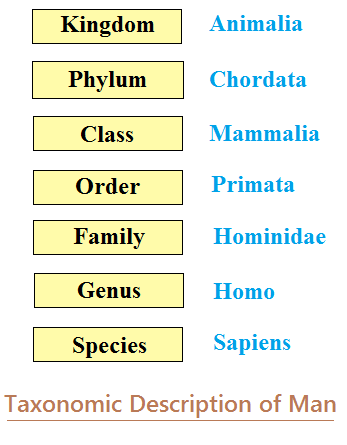
      5. There are 7 main taxonomic categories. It is defined as the sequence of categories in a decreasing or increasing which is from the highest kingdom to the lowest species. The hierarchy has two categories i.e., obligate and intermediate. Obligate is the one which is followed strictly and range from kingdom to species. Intermediate is not followed strictly and they. Also they are added in obligate list like subdivision, super family, super class, suborder, subspecies etc.
      a.  Species: It is the smallest taxonomic category. It is the basic unit of classification. It is the group of population which is similar in shape, form and reproductive features. Due to the same reproductive features, fertile sibling can be produced.
      b.  Genus: It is an assembly of group of similar species which involved from a common ancestor and have certain common characters called correlated characters. But it is not mandatory to have many species. Monotypic genera have only one species. Polytypic genera have more than one species. For example, cat and leopard are put in genus Panthera.
      c.  Family: It is the collection of similar genera. Families are characterised on the basis of reproductive and vegetative features. For example, lion and tiger are included in the family felidae.
      d.  Order: Being a higher category is the assembly of one or more than one similar families. Family Felidae are included in the order Carnivora.
      e.  Class: A class is a subdivision within a phylum made of one or more than one order. Class Mammalia includes all mammals which are monkey, gorilla, gibbon and man.
      f.  Phylum: It comprises of collection of similar classes. Phylum Chordata of animals has class Mammalia along with fishes, reptiles, birds, and amphibians.
      g. Kingdom: All animals belonging to various phyla are assigned to the top most taxonomic category called kingdom. Example all animals are included in Kingdom Animalia. All plants are included in kingdom Plantae. The unit that denotes grouping of organism based on observable features is known as Taxon.
                                           

      Taxonomic Aids

      1. The different methods which are being used to identify and classify organisms are referred to as Taxonomic aids. Identification of organisms is a tedious process.
      2. Keys are used for identification and are based on the contrasting characters. These are referred as Taxonomic key.
      3. Biologists use herbarium, botanical garden, museums, zoological parks and keys in taxonomical studies.
      4. Herbarium is a collection of plant parts that usually have been dried, presses and preserved on sheets.
      5. Museums have collection of preserved plants and animal specimens for the study and reference.
      6. Major Botanical Gardens

        1. The Royal Botanic Garden – Largest Botanical Garden
        1. Oldest botanical garden is ‘Padua Botanical Garden’, Italy 
        1. Acharya Jagadish Chandra Bose Indian Botanic Garden, Shibpur, Kolkata
        1. Agri Horticultural Society of India, Alipore, Kolkata
        1. Assam State Zoo-cum-Botanical Garden, Guwahati
        1. Botanical Garden, Near Sarangpur, Chandigarh
        1. Empress Garden, Pune
        1. Garden of Medicinal Plants, North Bengal University, West Bengal.    Important Terms for revision   -                          Please define the following terms         Nomenclature,Taxon,Systematics,Monographs,ICBN,ICZN.                                                                                 

Wednesday, 8 April 2020

Tips for CBSE Biology XII Practical and experiment synopsis 2020-2021


Biology that deals with the study of the living world and living organisms wouldn't be complete without practical classes. Whether you want to become a doctor or biotechnologist or simple ace your exams, remember to prepare for your Biology practical exams in addition to your preparation for Biology theory exams. Here are some
Biology practical syllabus
Evaluation scheme Maximum Marks: 30
One major experiment 5
One minor experiment 4
Slide preparation 5
Spotting 7
Practical record + viva vice 4
Project record + viva vice 5
Total 30 marks

Time -3 Hours.
1.    Prepare a temporary mount to observe pollen germination.

2.    Collect and study soil from at least two different sites and study them for texture, moisture content, pH and water holding capacity. Correlate with the kinds of plants found in them.

3.    Collect water from two different water bodies around you and study them for pH, clarity and presence of any living organism.

4.    Study the presence of suspended particulate matter in air at two widely different sites.

5.    Study the plant population density by quadrat method.

6.    Study the plant population frequency by quadrat method.

7.    Prepare a temporary mount of onion root tip to study mitosis.

8.    Study the effect of different temperatures and three different pH on the activity of salivary amylase on starch.

9.    Isolate DNA from available plant material such as spinach, green pea seeds, papaya, etc.

B.  Study/observation of the following (Spotting)

1.    Flowers adapted to pollination by different agencies (wind, insects, birds).

2.    Pollen germination on stigma through a permanent slide or scanning electron micrograph.

3.    Identification of stages of gamete development, i.e., T.S. of testis and T.S. of ovary through permanent slides (from grasshopper/mice).

4.    Meiosis in onion bud cell or grasshopper testis through permanent slides.

5.    T.S. of blastula through permanent slides (Mammalian).

6.    Mendelian inheritance using seeds of different colour/sizes of any plant.

7.    Prepared pedigree charts of any one of the genetic traits such as rolling of tongue, blood groups, ear lobes, widow's peak and colourblindness.

8.    Controlled pollination - emasculation, tagging and bagging.

9.    Common disease causing organisms like Ascaris, Entamoeba, Plasmodium, any fungus

causing ringworm through permanent slides, models or virtual images. Comment on symptoms of diseases that they cause.

10. Two plants and two animals (models/virtual images) found in xeric conditions. Comment upon their morphological adaptations.


11. Two plants and two animals (models/virtual images) found in aquatic conditions. Comment upon their morphological adaptations.

Tips
- Study the Biology theory that will form the basis of your experiments thoroughly
- The key to scoring high marks during a Biology practical exam is diagrams. Study from diagrams, revise from diagrams and practice drawing diagrams
- Spotting section can be scoring if you are familiar with the diagrams
- Knowing how to make correct sides is very important
- Understand the syllabus comprehensively so in each experiment/spotting you know what is to be done
- Make a quick revision list for Biology practical preparation to revise the important points and concepts you need to know
- Group study is helpful while preparing, each friend can describe an experiment while others try to identify the concept used in the experiment
- Note down your experiment procedure carefully, many students lose marks while writing the project notes in a hurry

Although the Biology practical exam may seem easy, it's important to devote some time to prepare, to help you score high in the overall Biology subject; theory and practical combined.


Syllabus Synopsis XI CBSE BIOLOGY 2020-2021


BIOLOGY (Code No. 044)

COURSE STRUCTURE

CLASS XI (2020 -21) (THEORY)

Time:3 Hours
Max. Marks: 70


Unit
Title
No. of Periods
Marks


I
Diversity of Living Organisms
27
12


II
Structural Organization in Plants and Animals
27
12


III
Cell: Structure and Function
26
12


IV
Plant Physiology
40
17


V
Human Physiology
40
17


Total
160
70


Unit-I Diversity of Living Organisms

Chapter-1: The Living World

What is living? Biodiversity; Need for classification; three domains of life; taxonomy and systematics; concept of species and taxonomical hierarchy; binomial nomenclature; tools for study of taxonomy- museums, zoological parks, herbaria, botanical gardens, keys for identification.

Chapter-2: Biological Classification

Five kingdom classification; Salient features and classification of Monera, Protista and Fungi into major groups; Lichens, Viruses and Viroids.

Chapter-3: Plant Kingdom

Salient features and classification of plants into major groups - Algae, Bryophyta, Pteridophyta, Gymnospermae and Angiospermae (salient and distinguishing features and a few examples of each category); Angiosperms - classification up to class, characteristic features and examples.

Chapter-4: Animal Kingdom

Salient features and classification of animals, non-chordates up to phyla level and chordates up to class level (salient features and distinguishing features of a few examples of each category). (No live animals or specimen should be displayed.)

Unit-II Structural Organization in Animals and Plants

Chapter-5: Morphology of Flowering Plants

Morphology and modifications: Morphology of different parts of flowering plants: root, stem, leaf, inflorescence, flower, fruit and seed. Description of families: Fabaceae, Solanaceae and Liliaceae (to be dealt along with the relevant experiments of the Practical Syllabus).

Chapter-6: Anatomy of Flowering Plants

Anatomy and functions of different tissues and tissue systems in dicots and monocots. Secondary growth.

Chapter-7: Structural Organisation in Animals

Animal tissues; Morphology, Anatomy and functions of different systems (digestive, circulatory, respiratory, nervous and reproductive) of an insect-cockroach (a brief account only).

Unit-III Cell: Structure and Function

Chapter-8: Cell-The Unit of Life

Cell theory and cell as the basic unit of life, structure of prokaryotic and eukaryotic cells; Plant cell and animal cell; cell envelope; cell membrane, cell wall; cell organelles - structure and function; endomembrane system, endoplasmic reticulum, golgi bodies, lysosomes, vacuoles, mitochondria, ribosomes, plastids, microbodies; cytoskeleton, cilia, flagella, centrioles (ultrastructure and function); nucleus.

Chapter-9: Biomolecules

Chemical constituents of living cells: biomolecules, structure and function of proteins, carbohydrates, lipids, nucleic acids; Enzymes- types, properties, enzyme action.

Chapter-10: Cell Cycle and Cell Division

Cell cycle, mitosis, meiosis and their significance


Unit-IV Plant Physiology


Chapter-11: Transport in Plants

Movement of water, gases and nutrients; cell to cell transport, diffusion, facilitated diffusion, active transport; plant-water relations, imbibition, water potential, osmosis, plasmolysis; long distance transport of water - Absorption, apoplast, symplast, transpiration pull, root pressure and guttation; transpiration, opening and closing of stomata; Uptake and translocation of mineral nutrients - Transport of food, phloem transport, mass flow hypothesis.

Chapter-12: Mineral Nutrition

Essential minerals, macro- and micronutrients and their role; deficiency symptoms; mineral toxicity; elementary idea of hydroponics as a method to study mineral nutrition; nitrogen metabolism, nitrogen cycle, biological nitrogen fixation.

Chapter-13: Photosynthesis in Higher Plants

Photosynthesis as a means of autotrophic nutrition; site of photosynthesis, pigments involved in photosynthesis (elementary idea); photochemical and biosynthetic phases of photosynthesis; cyclic and non-cyclic photophosphorylation; chemiosmotic hypothesis; photorespiration; C3 and C4 pathways; factors affecting photosynthesis.

Chapter-14: Respiration in Plants

Exchange of gases; cellular respiration - glycolysis, fermentation (anaerobic), TCA cycle and electron transport system (aerobic); energy relations - number of ATP molecules generated; amphibolic pathways; respiratory quotient.

Chapter-15: Plant - Growth and Development

Seed germination; phases of plant growth and plant growth rate; conditions of growth; differentiation, dedifferentiation and redifferentiation; sequence of developmental processes in a plant cell; growth regulators - auxin, gibberellin, cytokinin, ethylene, ABA; seed dormancy; vernalisation; photoperiodism.


Unit-V Human Physiology

Chapter-16: Digestion and Absorption

Alimentary canal and digestive glands, role of digestive enzymes and gastrointestinal hormones; Peristalsis, digestion, absorption and assimilation of proteins, carbohydrates and fats; calorific values of proteins, carbohydrates and fats; egestion; nutritional and digestive disorders - PEM, indigestion, constipation, vomiting, jaundice, diarrhoea.

Chapter-17: Breathing and Exchange of Gases

Respiratory organs in animals (recall only); Respiratory system in humans; mechanism of breathing and its regulation in humans - exchange of gases, transport of gases and regulation of respiration, respiratory volume; disorders related to respiration - asthma, emphysema, occupational respiratory disorders.

Chapter-18: Body Fluids and Circulation

Composition of blood, blood groups, coagulation of blood; composition of lymph and its function; human circulatory system - Structure of human heart and blood vessels; cardiac cycle, cardiac output, ECG; double circulation; regulation of cardiac activity; disorders of circulatory system - hypertension, coronary artery disease, angina pectoris, heart failure.

Chapter-19: Excretory Products and their Elimination

Modes of excretion - ammonotelism, ureotelism, uricotelism; human excretory system – structure and function; urine formation, osmoregulation; regulation of kidney function - renin - angiotensin, atrial natriuretic factor, ADH and diabetes insipidus; role of other organs in excretion; disorders - uremia, renal failure, renal calculi, nephritis; dialysis and artificial kidney, kidney transplant.

Chapter-20: Locomotion and Movement

Types of movement - ciliary, flagellar, muscular; skeletal muscle, contractile proteins and muscle contraction; skeletal system and its functions; joints; disorders of muscular and skeletal systems - myasthenia gravis, tetany, muscular dystrophy, arthritis, osteoporosis, gout.

Chapter-21: Neural Control and Coordination

Neuron and nerves; Nervous system in humans - central nervous system; peripheral nervous system and visceral nervous system; generation and conduction of nerve impulse; reflex action; sensory perception; sense organs; elementary structure and functions of eye and ear

Chapter-22: Chemical Coordination and Integration

Endocrine glands and hormones; human endocrine system - hypothalamus, pituitary, pineal, thyroid, parathyroid, adrenal, pancreas, gonads; mechanism of hormone action (elementary idea); role of hormones as messengers and regulators, hypo - and hyperactivity and related disorders; dwarfism, acromegaly, cretinism, goiter, exophthalmic goiter, diabetes, Addison's disease.
Note: Diseases related to all the human physiological systems to be taught in brief.


Tuesday, 6 August 2019

Polygenic inheritance -Genetics.

   Polygenic Inheritance


When a trait is being controlled by many genes than such genes are called polygenes and inheritance of such genes is called Polygenic Inheritance. 
Certain traits which are controlled by polygenes are-Body height,body weight, body colour etc.
Skin cells are melanocytes are they are secreting a pigment called melanin pigment.Skin colours are due to the melanin.Genes which are responsible for melanin secretion are controlled by polygenes as described in the video.

Skin colour is controlled by AABB and aabb polygenes.Let us study about the various genotype and phenotypes for the inheritance of Body colour.
AABB=Black
AABb/AaBB=Dark
AAbb/aaBB/AaBb=medium
Aabb/=light
aabb=white  etc.


Tuesday, 12 March 2019

Can we buy hapiness from money?

Can we buy happiness from money? 

In today's world we are becoming ambitious and planning to get higher salary and perks in order to have more happiness in life.


Unfortunately we are in search of a mirage.It is unholy combination of money and happiness.


Happiness is altogether a different trait.We are not training human mind for happiness.If money will give joy then why millionaires and billionaires are depressed and unhappy?


As per the data of World health organisation suicide is the second major cause of death among 15-29 Year age group.Countries like Barbuda,Jamaica having lowest suicide rate.


21st century is a century of learning the art of negotiations and survival skills.In our curriculum in India are we giving enough scope for a child to learn these skills? If our answer is no then what could be done in order to train these young minds so that they can experience that -

With hard work maintaining positive attitude is essential life fuel.
Never give up skill is driving force of life.
Scientific temperament and rational thinking is the headlight of life car.
Discussing your problems with parents teachers and friends is like a airbags of your car.
Playing,doing yoga,consulting a doctor if required is like servicing your life car.
lastly we should choose to be happy.I will not lose my temper whatever may be the circumstances -is like holding the car steering and putting your legs at right places on ABC ie Accelerator,brake and clutch .
Money is important for life but not essential for happiness.There is a thin line difference between greeds and needs.We should try to become rich and richer but during this course of action should we compromise with our family ,happiness and health is a question for debate. 

If you have any real life experience on this topic do share in the comment box.

Happy reading and always choose happiness.


Thursday, 7 March 2019

Internal Budding-Gemmule Formation


Internal Budding –Asexual Reproduction in Spongilla (Fresh water sponge)
Key terms-
Totipotent cells-Cells capable to divide
Budding-Methods of asexual reproduction through bud projection.
Endogenous bud-Bud develops inside the body.
Gemmule-Internal bud
Archaeocytes-Totipotent cell present inside gemmule.
Spongilla-Sponge kingdom Animalia & Phylum Porifera.
Budding is also known as endogenous budding and it’s a method of asexual reproduction in freshwater sponge i.e. Spongilla.
How internal budding is taking place?
This is a method of perennation and to pass unfavorable conditions. This is an effective way of dispersal of sponges.
During unfavorable conditions totipotent cells of Spongilla form internal bud which are called gemmule.
Structure of Gemmule-
It consists of outer membrane, inner membrane and Archaeocytes (totipotent cells) which are capable of cell division. Totipotent cells are surrounded by an internal membrane and opaque outer membrane. Outer membrane is having spicules-fiber like structures.

Inside the inner membrane totipotent cells are present and they are called Archaeocytes.They will come out upon favorable condition through a pore called micropyle and produce new spongilla.
Youtube link- https://youtu.be/Z19gozl5Ay4

Multiple Ovulation embryo transfer Technology-Animal breeding

Blood Clotting

Structure of Sperm

Lac Operon -Gene Regulation

MCQ MOLECULAR BASIS OF INHERITANCE

  1. Amino acid sequence, in protein synthesis is decided by the sequence of ( a ) r RNA ( b ) t RNA ( c ) m RNA ( d ) c DNA 2. Antipa...